Breast Cancer
Breast cancer is a type of cancer that occurs when the cells in the breast tissue grow abnormally and uncontrollably, forming a mass or lump called a tumor. These abnormal cells can invade
surrounding tissues and spread to other parts of the body through the bloodstream or lymphatic system, a process known as metastasis.
Breast cancer is the most common cancer among women worldwide, although it can also occur in men. The exact cause of breast cancer is not fully understood, but it is believed to result from a
combination of genetic, hormonal, and environmental factors.
Risk factors
- Age: The risk of breast cancer increases with age, and most cases are diagnosed in women over 50 years old.
- Gender: Women are at a higher risk of developing breast cancer compared to men.
- Family history: Having a close relative, such as a mother, sister, or daughter, who has had breast cancer increases the risk.
- Genetic mutations: Certain inherited genetic mutations, such as BRCA1 and BRCA2, significantly increase the risk of breast cancer.
-
Hormone exposure: Exposure to estrogen, either through hormone replacement therapy or a longer lifetime exposure due to early menstruation or late menopause, can increase
the risk.
- Reproductive history: Having no children or having the first child after age 30 may slightly increase the risk of breast cancer.
- Radiation exposure: Exposure to ionizing radiation, especially at a young age, increases the risk of breast cancer.
- Lifestyle factors: Factors such as obesity, physical inactivity, alcohol consumption, and a diet high in fat can increase the risk of breast cancer.
Symptoms
Common symptoms of breast cancer include:
- A lump or thickening in the breast or underarm area
- Changes in the size, shape, or appearance of the breast
- Changes to the skin over the breast, such as dimpling or redness
- Nipple inversion or changes to the nipple, including discharge
- Swelling or pain in the breast
It's important to note that these symptoms can also be caused by non-cancerous conditions. However, if you notice any of these changes or other unusual symptoms, it's important to consult a
healthcare professional for further evaluation.
Diagnosis
Diagnostic tests for breast cancer may include:
- Clinical breast exam: A healthcare professional will examine the breasts and underarms for lumps or other changes.
- Mammogram: This is an X-ray of the breast that can help detect breast cancer at an early stage, often before it can be felt.
- Ultrasound: This imaging test uses sound waves to create images of the breast tissue, which can help distinguish between solid tumors and fluid-filled cysts.
- Magnetic resonance imaging (MRI): This imaging technique uses a powerful magnet and radio waves to create detailed images of the breast tissue.
- Biopsy: A small sample of breast tissue is removed and examined under a microscope to determine if cancer cells are present.
Treatment
Treatment for breast cancer depends on the stage, type, and aggressiveness of the cancer, as well as the patient's overall health and preferences. Common treatment options include:
- Surgery: This may involve removing the tumor (lumpectomy) or the entire breast (mastectomy), as well as nearby lymph nodes.
- Radiation therapy: High-energy X-rays or other types of radiation are used to kill cancer cells in the breast and surrounding tissue.
-
Chemotherapy: These are drugs that kill rapidly dividing cells, including cancer cells. Chemotherapy can be given before surgery to shrink the tumor or after surgery to
kill any remaining cancer cells.
-
Hormone therapy: For cancers that are hormone receptor-positive, hormone therapy can block the effects of estrogen or lower estrogen levels in the body, thereby slowing or
stopping the growth of cancer cells.
- Targeted therapy: These drugs target specific proteins or pathways involved in the growth and survival of cancer cells, such as HER2-positive breast cancers.
Early detection and advancements in treatment
Topic Highlights:-
- Breast cancer is the second most common cause of cancer-related death in women.
- There are different forms of breast cancer, all of which are classified based on the stage of the tumor.
-
This presentation describes the anatomy and the function of the breast, development of cancer, various stages of cancer, types of breast cancer, symptoms and spread of cancer, diagnosis
and treatment of cancer – including mastectomy, and self-help.
Transcript:-
Breast cancer is the second most common form of cancer in Europe, with an estimated 245,000 new cases each year. In women, it is the most common type of cancer. But it is not just women who get
it—1 in every 150 patients who get it is a man.
Breast cancer is the second most common cause of cancer-related deaths in women. However, as a result of improved screening, extensive research and development of treatments, the outlook for
patients has improved substantially in recent years.
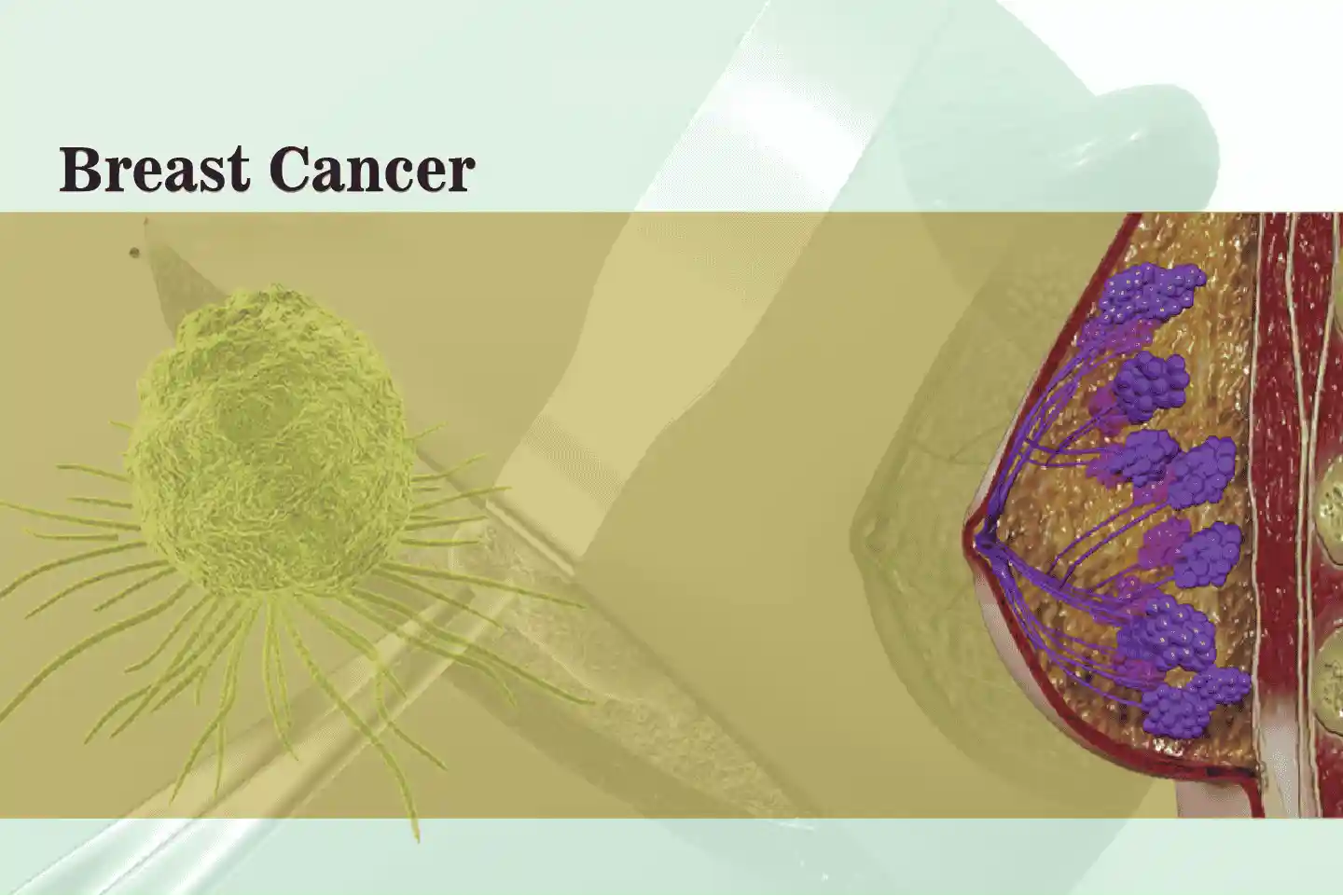
Each breast is made up of a glandular tissue, connective tissue and fat. The glandular tissue consists of lobules capable of producing milk after childbirth. A network of ducts carries the milk
from the lobules to the nipple. Fat fills the spaces between the lobules and ducts and accounts for nearly 80 percent of the breast during the reproductive years. An area of breast tissue extends
into the armpit (or axilla) called the axillary tail.
A network of vessels drain fluid called lymph from the breast mainly into lymph nodes in the armpit, but some lymph goes to lymph glands, behind the breastbone and behind the collarbone. These
lymph vessels belong to a network of channels and lymph nodes known as the lymphatic system, which filters and returns lymph to the bloodstream and helps protect the body against infection.
Within our bodies cells are constantly growing old, dying and being replaced by new cells. This renewal process is normally ordered and controlled. However, it can sometimes become uncontrolled,
resulting in a mass known as a tumor or a neoplasm. Tumors may be benign or malignant. A benign tumor is not cancer—it does not invade into other tissues or spread around the body.
Malignant tumors are cancerous. They invade surrounding tissues and destroy them. Cells can also break off from the original tumor and travel through the lymphatic system and the bloodstream to
other organs where they take hold and grow to produce secondary tumors. This spread of cancer is called metastasis. Some tumors are aggressive and spread early in their development whereas others
become metastatic only in the later or advanced stages of the disease.
There are several different forms of breast cancer. They are classified according to their appearance under the microscope and whether the cancer has spread. The two most common forms of breast
cancer described by the pathologist are ductal carcinoma, which was originally thought to originate in the milk ducts, and lobular carcinoma, which was thought to originate in the lobules. In
fact, it is now known that both ductal and lobular cancers develop in the lobule and the duct, which drains the lobule, which are known together as the terminal duct lobular unit. These two types
of cancer behave differently.
If the cancer remains in its place of origin in the terminal duct or the lobule, it is described as in situ—which means ‘in place’. For example, a cancer consisting of ductal cells is known as
ductal carcinoma in situ. Alternatively, if the cancer has spread to neighboring tissues, it is called invasive or infiltrating.
Almost 80% of breast cancer cases are so-called cancers of ductal type. 5-10% are lobular and others are so-called special types that have particular features under the microscope, such as
producing tubes or tubules in tubular cancer or producing mucous or mucin in mucinous carcinoma. There are special types of tumors like tubular and mucinous that tend to be less aggressive cancers
and are less likely to spread. In carcinoma in situ of ductal or lobular type the cells remain within the lobules and draining ducts.
Inflammatory breast cancer is an uncommon type of cancer and accounts for about one percent of breast tumors. Instead of forming a lump, the cancer cells grow along and block lymph vessels in the
skin of the breast. This causes reddening and swelling of the breast.
Paget’s disease of the breast involves an eczema-like rash which develops on the nipple and sometimes on the surrounding areola and is seen in 1% of women with breast cancer. The skin of the
nipple and the areola may be ulcerated, inflamed and itchy with fluid discharge. About 90% of patients with Paget’s disease have underlying invasive or in situ breast cancer.
Age is the biggest risk factor for breast cancer. Older females are at highest risk. Several other factors are also known to increase the risk in women. These include starting menstruation early
in life, experiencing a late menopause, taking hormone replacement therapy or oral contraceptive treatment, having children late in life (when over 30-years-old) or not bearing any children and an
absence of breastfeeding. A family history of breast cancer is a risk factor of increased likelihood of the disease. Similarly, if a person has had breast cancer, there is a greater chance that
they will develop another breast cancer. Diet also plays a role since obesity after menopause and a high intake of alcohol are both thought to increase risk.
There may not be any symptoms in the early stages of breast cancer. Through screening the cancer can be discovered before symptoms develop. The most common sign is a lump in the breast. Other
signs that may indicate breast cancer, particularly advanced cases, include a change in the size or shape of the breast or dimpling of the skin on the breast. Alternatively, the breast may be
inflamed, sore and swollen. The nipple may also show changes, like fluid discharge, it may become inverted or pulled in, there may be a thickening or lump behind it or an eczema-like rash may
develop on the nipple.
Diagnosis involves an examination of the breasts and lymph glands and the surrounding areas. The doctor will also ask questions about your medical and family history. Several tests are available
to help make a diagnosis. These include a mammogram, an x-ray of the breast that detects tumors that can or cannot be felt on physical examination.
Mammography helps to locate a tumor but is only of real value in older women (those over 35-years-old.) Ultrasound can help tell whether a lump is solid, and if solid it is possibly cancerous. It
can also tell whether it is filled with fluid and is a benign cyst. Fine needle or core biopsy is performed so that small quantities of breast cells are removed so they can be examined. A local
anesthetic is used to numb the area first. Several biopsies are usually taken. The samples are then sent to the laboratory so that the cells and tissue can be assessed carefully under the
microscope. Ultrasound or X-rays are used to guide the needle to the correct position. Rarely, a biopsy is performed, which is minor surgery—for example to remove the entire lump for examination.
Routine blood tests and X-rays can also help detect cancer. The doctor may suggest a bone CT, MRI or PET scan to detect a patient’s general fitness and the spread of cancer to other parts of the
body.
Tumor tissue may also be examined for hormone and growth factor receptors. The hormones estrogen and progesterone enhance the growth of the tumor. Similarly, a tumor with high levels of the human
epidermal growth factor receptor 2 (known as HER2 positive) will grow more quickly than HER2-negative tumors. The receptor status of the tumor helps determine which treatments are most suitable.
The tumor is staged from 0 to 4. The stage is determined by a TNM score. TNM refers to tumor, lymph node and metastasis. The original tumor is scored from 0 to 4 depending on its size and spread.
The lymph nodes are scored 0 to 3 depending on the extent of involvement and metastasis is scored as 0 if absent or 1 if present.
In stage 0, the cells are contained within the ducts. Stage 1 cancers have a tumor smaller than 2 centimeters which has not spread. In stage 2, the tumor may be 2–5 centimeters and/or the lymph
nodes may be affected, but the cancer has not spread to other parts of the body. Stage 1 and 2 are known as early breast cancer. Stage 3 and 4 represent advanced breast cancer. In stage three, the
tumor is over 5 centimeters and may be attached to surrounding muscle or skin. The lymph nodes are usually affected but there is no metastasis. In stage 4, the final stage, cancer spreads to other
organs in the body.
Treatment of breast cancer depends on many factors, including the type and stage of the cancer, its receptors and the age and menopausal status of the patient. For early disease, surgery to remove
the cancer is the primary treatment, which may be followed by a course of radiotherapy. To reduce the risk of recurrence, chemotherapy and/or hormone therapy may also be used in stage 1 and 2 of
the disease.
Surgery may be an option for treating stage 3 cancers after initial treatment with chemotherapy or hormone therapy for reducing the size of the tumor. Radiation therapy is usually given following
surgery to reduce the possibility of metastases.
Lumpectomy involves the removal of the tumor along with a small amount of healthy tissue surrounding it, preserving a major portion of the breast—which is why it is known as breast-conserving
surgery. Patients having a lumpectomy for invasive cancer would have their lymph nodes either removed or checked at the same time.
Mastectomy involves the removal of the whole breast, including the nipple and areola. Lumpectomy or mastectomy can be combined with removal of some of the axillary nodes (so-called sampling) or,
if blue dye and radioactive material is used to find the nodes which drain the breast, sentinel lymph node biopsy. Alternatively, if the axillary nodes are thought or known to be affected, all the
nodes are removed (which is known as axillary node clearance.) Radiotherapy may be advised after mastectomy, if necessary. Breast reconstructive surgery may be possible for some women undergoing
mastectomy.
Radiation therapy uses high-energy X-rays to destroy the cancer cells. It is most commonly used after lumpectomy and, if required, after mastectomy. It is rarely used in large or locally advanced
cancers to reduce the tumor size before surgery, alongside medication. The therapy is usually given as a series of 10-minute daily sessions over 3 to 6 weeks.
Hormonal therapies are also given after surgery and radiotherapy or chemotherapy to reduce the risk of the cancer returning. These drugs are only effective if the cancer has the relevant hormone
receptors. Tamoxifen is an anti-estrogen drug, which binds to receptors and prevents the hormone from being used by the tumor cells to grow. Aromatase inhibitors reduce estrogen levels by blocking
its production in body tissues in post-menopausal women only. Examples include anastrozole, letrozole and exemestane.
Stopping production of estrogen in the ovaries is possible using agonists of luteinising hormone releasing-hormone such as goserelin, which decrease the production of estrogen-stimulating hormones
by the brain, so removing the stimulus for the ovaries to produce estrogen.
Chemotherapy is the use of cytotoxic drugs that destroy cancer cells by interfering with how they grow and divide. There are many different types of chemotherapy drugs. They are often used in
combination over a course of several months. Examples are doxorubicin, epirubicin, cyclophosphamide, 5-fluorouracil, methotrexate, paclitaxel and docetaxel.
HER2-positive tumors may also respond to treatment with the monoclonal antibody trastuzumab. It attaches to HER2 receptors on the cancer cells and reduces incoming growth signals.
The earlier breast cancer is discovered, the better the outlook for treatment. You should report any changes in the shape or feel of your breasts to your doctor. A self breast exam should begin by
looking at your breasts in a mirror with your hands on your hips. Look for any changes in the texture, size or shape. Inspect the breasts again with your arms raised overhead and your hands
clasped together. Then feel each breast while lying down. Use a firm touch, keeping your fingers flat and together.
With the left arm raised above your head, use the right hand to examine the left breast. Move your hand in circles beginning at the nipple and radiating outward, to make sure that every part of
the breast is examined, from your collarbone to the top of your abdomen, and from your armpit to between the breasts. Switch hands and examine the other breast in the same way. Finally, repeat the
examination while standing up. Some people find it easiest to do this in the shower. Report any changes to your doctor.
Regular screening tests are also advised. Mammography is advised every three years for women between the ages of 50 and 70.
The causes of breast cancer are not fully understood but there are several steps you can take to limit the risk of developing breast cancer. For instance, limit your alcohol intake, lose any
excess weight and exercise regularly. Eat a well-balanced diet with plenty of fresh fruits and vegetables, and avoid exposure to pesticides. Finally, discuss the benefits and risks with your
doctor before starting any hormone replacement or oral contraceptive therapy.